Closing the Deal: How to Write a High-Converting Sales Executive Resume
A sales executive resume should read like a business case. Show quota ownership, pipeline quality, and revenue outcomes with precision.

Apply this guide immediately with RESUGROW tools
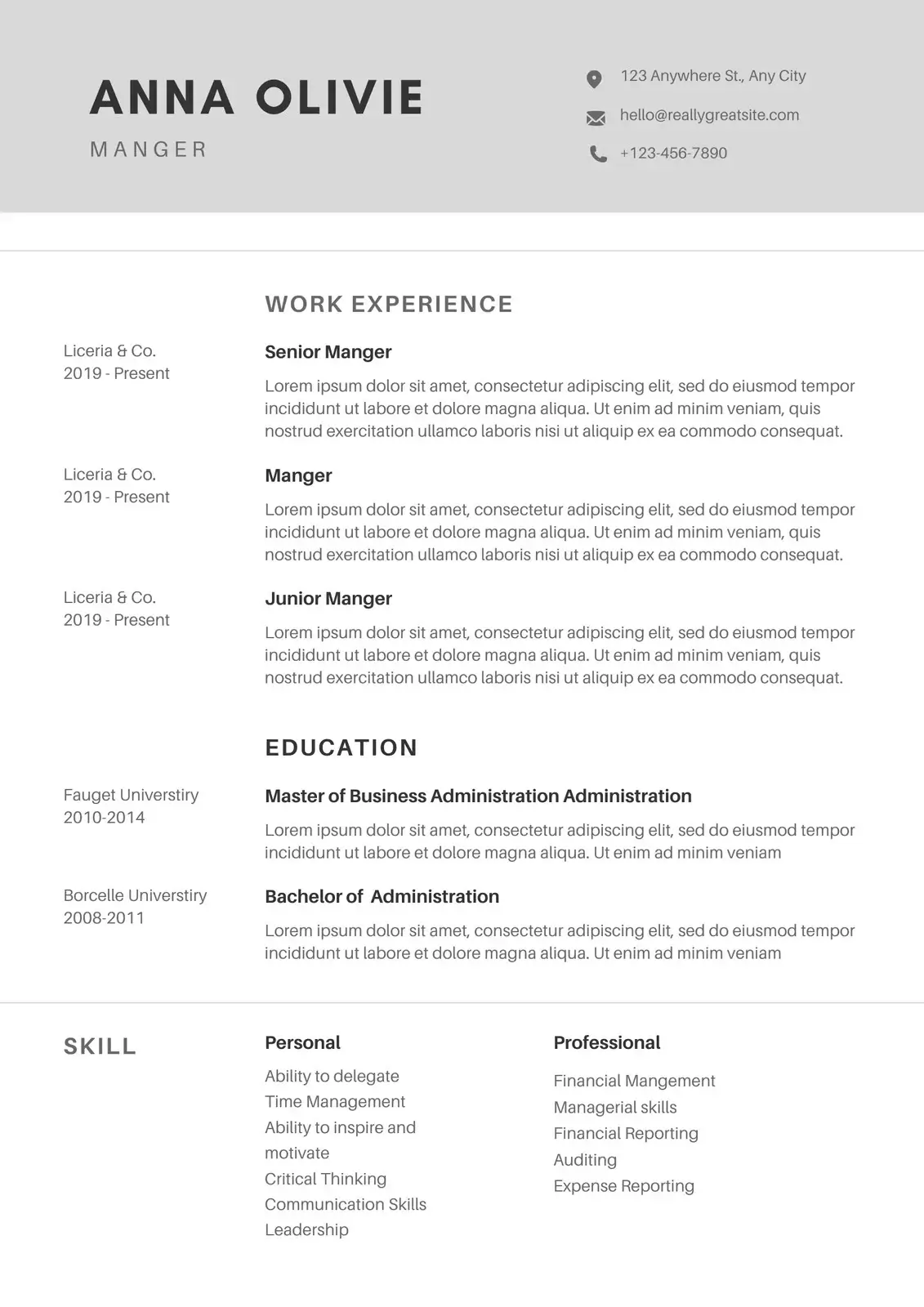
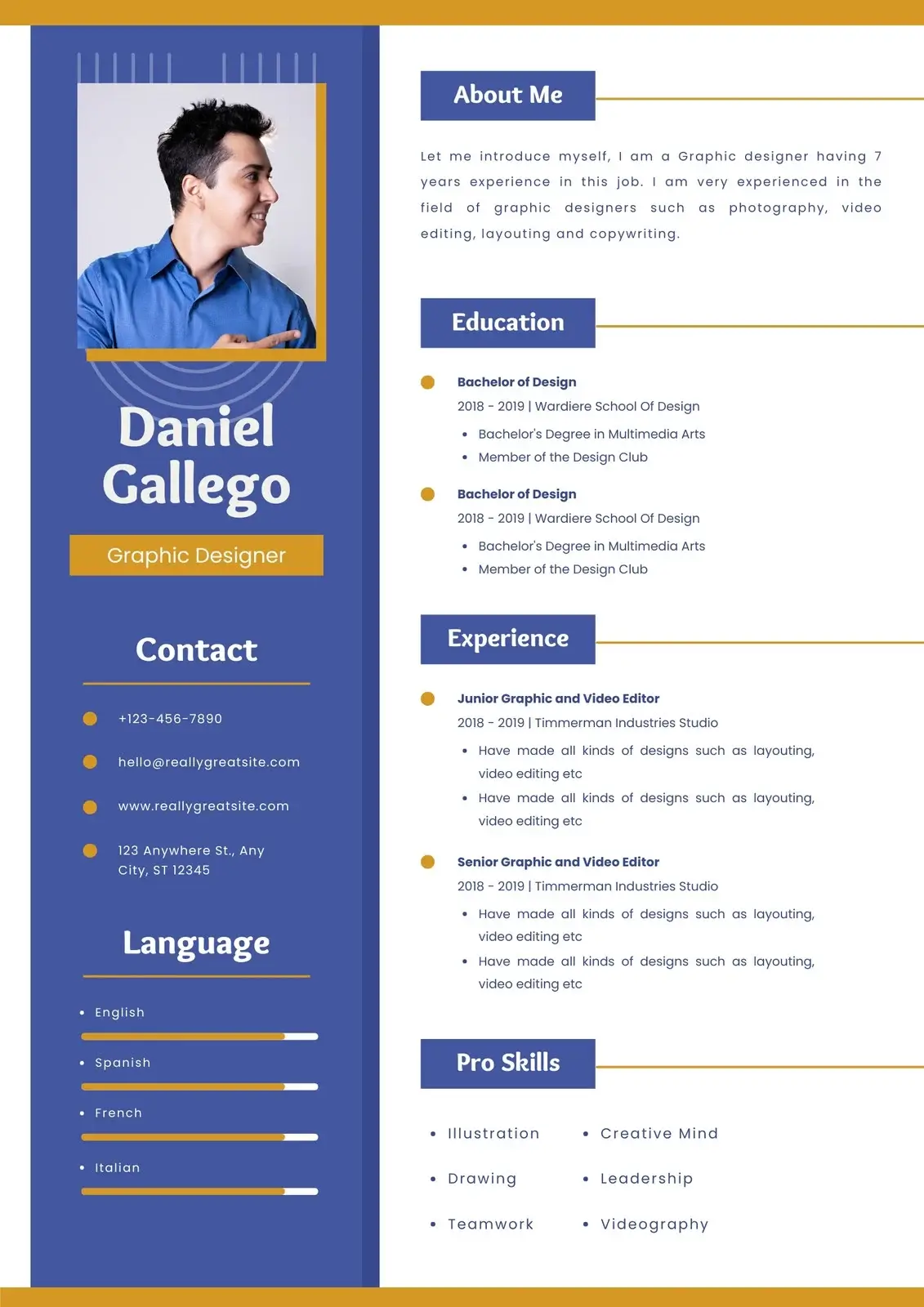
Sales resumes fail when they list tasks instead of outcomes. Recruiters need commercial proof quickly.
What to Prioritize
Your strongest sections are: - Summary with selling context - Experience with quota and revenue metrics - Skills that support pipeline execution
Metrics That Convert
Include: - quota attainment percentage - annual or quarterly revenue closed - pipeline created - average deal size and cycle improvement
Bullet Example
Instead of: "Managed enterprise accounts and built relationships."
Use: "Owned a $3.2M enterprise portfolio, closed 128% of annual quota, and improved renewal expansion by 17%."
Strategic Positioning
If you sell across long cycles, highlight forecast accuracy and multi-stakeholder deal orchestration. If you lead new business, emphasize outbound quality and meeting-to-opportunity conversion.
Final Rule
Your resume is your first sales call. If it does not make business impact obvious in 10 seconds, rewrite it.
Why this topic matters more in 2026
Recruiting workflows in 2026 are faster, data-heavier, and less forgiving of ambiguity. Hiring teams often review applications in layered filters: parser quality, role relevance, and interview confidence signals. If any one layer is weak, a strong candidate can still be filtered out. That is why closing the deal: how to write a high-converting sales executive resume is not just "nice to have" guidance. It is a practical conversion lever.
Most candidates assume effort alone guarantees outcomes. In reality, communication quality determines whether effort is visible. This applies to every function, from engineering to sales to operations. Your resume and supporting assets are decision interfaces. Recruiters use them to infer readiness quickly under time pressure. Strong candidates win when their signal is clean, prioritized, and measurable.
Search intent and recruiter intent are now connected
People searching "Sales Resume" usually have an immediate pain point: low response rate, unclear positioning, or confusion about what to fix next. Recruiter intent mirrors this from the other side. Recruiters are trying to reduce risk while moving fast. They prefer candidates whose documents reduce interpretation effort.
This alignment creates opportunity. If your application materials answer high-intent questions directly, you improve both discoverability and conversion. In practice, this means: - clear role identity at the top - standard section naming for parser confidence - measurable outcomes in core bullets - direct alignment with role-specific keywords
A practical framework you can repeat
Treat every application cycle like a three-pass system.
Pass one: Structural integrity Confirm that your layout is parser-safe and easy to scan. Avoid unnecessary visual complexity in core sections. Preserve readability before personalization.
Pass two: Relevance mapping Extract high-signal terms from the target role and mirror them where genuinely true. Prioritize summary, top skills, and recent high-impact bullets.
Pass three: Outcome emphasis Strengthen weak statements by adding context and measurable results. This is where most response-rate gains happen.
This method is reliable because it separates concerns. You are not trying to fix everything at once. You are improving in the same sequence recruiters evaluate.
Before and after quality examples
Weak: "Worked with teams to improve product performance."
Strong: "Led cross-functional performance initiative across product and engineering, reducing page response time by 34% and lifting conversion by 11%."
Weak: "Responsible for reporting and analytics."
Strong: "Built weekly analytics reporting framework used by leadership to prioritize roadmap bets, reducing decision latency from 10 days to 3."
Weak: "Handled customer accounts."
Strong: "Managed 42 enterprise accounts and improved renewal expansion by 17% through proactive adoption strategy."
Every stronger example follows the same pattern: ownership + scope + impact.
What hiring teams actually infer from stronger writing
When your bullets are specific, recruiters infer: - clearer ownership - better operational maturity - stronger communication discipline - lower onboarding risk
These inferences matter because interviews are expensive. Hiring managers choose candidates who appear easiest to trust quickly. You do not need perfect language. You need credible evidence in the right places.
Common mistakes that suppress conversion
Mistake one: overloading the top section If your opening block is dense, recruiters may miss your strongest signal.
Mistake two: mixing strategic and tactical claims without context Claims need scope. Scope gives credibility.
Mistake three: listing tools without outcomes Tools indicate familiarity, not value. Outcomes indicate value.
Mistake four: inconsistent date and role formatting Formatting inconsistency creates unnecessary doubt in first-pass review.
Mistake five: under-tailoring One generic version across different role families usually underperforms.
The 30-minute optimization sprint
If you have limited time, use this sprint:
Minutes 1 to 8: Extract target terms and responsibilities from the job post.
Minutes 9 to 18: Rewrite summary and top bullets for relevance and measurable proof.
Minutes 19 to 25: Validate parser safety, section headings, and keyword placement.
Minutes 26 to 30: Run one final scan and remove low-value filler.
This sprint is short enough to repeat per application without burnout and strong enough to improve quality meaningfully.
How to use RESUGROW tools with this strategy
Use ATS Checker to identify structural and keyword gaps first. Move to Resume Builder for controlled rewrites and format consistency. Then use LinkedIn Review to ensure your profile tells the same professional story. When needed, add a targeted narrative layer with Cover Letter Builder.
The key is sequence. Diagnose first, edit second, validate third. This prevents over-editing and keeps your workflow objective.
Decision matrix for faster edits
If score is low and parsing confidence is weak: Start with structure and section labels.
If score is moderate but interview response is low: Prioritize bullet strength and metrics.
If score is high but role fit is weak: Increase tailoring in summary and skills ordering.
If resume and LinkedIn feel disconnected: Align positioning language and core achievements across both assets.
Quality bar checklist before submission
Use this final check: - role identity is clear in top section - three most relevant achievements are measurable - section labels are standard and readable - keyword usage is natural and role-specific - layout is clean on desktop and mobile PDF view - LinkedIn headline and summary support the same positioning
When these six checks pass, your application quality is usually high enough for first-pass visibility and credible recruiter follow-through.
Long-term advantage
Most candidates optimize once and stop. High-conversion candidates build a repeatable operating system. They maintain a strong master profile, clone targeted versions quickly, and iterate based on scanner feedback and recruiter outcomes.
That long-term loop compounds. Better materials lead to more interviews. More interviews create better stories. Better stories produce stronger materials again.
This is the point: career growth becomes more predictable when your communication assets are engineered, not improvised.
Final CTA
Do not leave this as theory. Run your current resume through Check your resume score, apply targeted edits in Resume Builder, and validate your positioning with LinkedIn Review. Small structural improvements done consistently can outperform full rewrites done rarely.
Advanced scenario rewrites you can adapt immediately
Here are high-frequency scenarios where candidates lose conversion and the rewrite pattern that usually improves outcomes.
Scenario 1: Cross-functional work sounds generic Weak: "Worked with product and engineering on releases." Better: "Partnered with product and engineering across six quarterly releases, reducing rollback incidents by 38% through release-readiness checklists."
Scenario 2: Project ownership is unclear Weak: "Helped launch onboarding update." Better: "Owned onboarding redesign launch plan, coordinating three teams and lifting week-one activation by 16%."
Scenario 3: Tool mention has no business value Weak: "Used SQL and dashboards." Better: "Built SQL-based cohort dashboard used in weekly leadership review, improving decision turnaround from 7 days to 2."
Scenario 4: Leadership claim without evidence Weak: "Strong leader and team player." Better: "Led a five-person delivery pod, increased sprint predictability from 62% to 87%, and mentored two junior contributors to promotion readiness."
Scenario 5: Operations bullet lacks scale Weak: "Improved internal processes." Better: "Standardized operations workflow across 11 markets, cutting handoff delays by 29% and reducing support escalations by 21%."
The 14-day optimization calendar
If you want repeatable gains, use this two-week calendar:
Day 1: Run baseline ATS scan and document weak modules. Day 2: Rewrite summary and top three role-fit bullets. Day 3: Align core skills with target description clusters. Day 4: Normalize formatting for heading consistency and date clarity. Day 5: Add one impact metric to each recent role section. Day 6: Update LinkedIn headline and About for message alignment. Day 7: Re-scan and record score deltas.
Day 8: Create role-specific variant A for target family one. Day 9: Create role-specific variant B for target family two. Day 10: Draft cover letter framework for both families. Day 11: Run side-by-side ATS checks per variant. Day 12: Remove low-value content and tighten scan clarity. Day 13: Final polish and export verified versions. Day 14: Submit strategically and track response patterns.
This cadence keeps effort focused while producing measurable improvements.
How to track whether your edits are working
Do not rely on intuition alone. Track these operating metrics:
Application-to-response rate If this does not improve after structural fixes, relevance mapping is still weak.
Response-to-interview rate If responses increase but interviews do not, role narratives may lack proof depth.
Interview progression rate If first rounds happen but later rounds drop, tighten alignment between claims and examples.
Time-to-tailor per application If tailoring takes too long, your master resume is not modular enough.
Set a 4-week measurement window and review trends weekly.
Cross-asset consistency checklist
Recruiters now cross-check quickly across resume, LinkedIn, and interview narrative. Use this consistency pass:
1. Your current title and target title are aligned across assets. 2. Core strengths repeat with similar wording in summary and profile headline. 3. Top three achievements are consistent in numbers and impact framing. 4. Dates are synchronized between resume and LinkedIn roles. 5. Skill signals in resume appear in LinkedIn Skills and experience language.
When cross-asset consistency is high, trust increases and interview friction drops.
High-ROI sections to optimize first
If you can only optimize a few parts, prioritize in this order:
1. Headline + summary positioning 2. First two bullets in latest role 3. Skills ordering for role relevance 4. Section heading clarity 5. LinkedIn headline and About alignment
These sections influence both parser scoring and recruiter first-pass judgment.
Interview alignment prompts
Use these prompts after resume updates so your interview story matches your written profile:
- Which achievement best represents my strongest role fit? - What operational challenge did I solve and how did I solve it? - Which metric proves the business impact clearly? - What would my manager say was my highest leverage contribution? - Which upcoming role responsibility can I map to past outcomes?
Consistent answers here make interviews feel more credible and less improvised.
Final implementation note
The most reliable candidates are not the ones who write the fanciest resume. They are the ones who run disciplined improvement cycles: diagnose, prioritize, rewrite, validate, and submit. If you follow that loop consistently, your materials improve faster than most candidates and your search becomes more predictable over time.
Ready to improve your score?